One of the first questions homeowners ask after deciding to build a custom home is:
“How long will the process take?”
While every project is unique, understanding the typical timeline can help homeowners plan more effectively and avoid unrealistic expectations.
In Kelowna, custom home construction involves much more than simply breaking ground. Design work, permitting, engineering, site preparation, weather conditions, material lead times, and inspections all contribute to the overall schedule.
The good news is that with proper planning and an experienced builder, most projects move smoothly from concept to completion.
How Long Does It Take to Build a Custom Home in Kelowna?
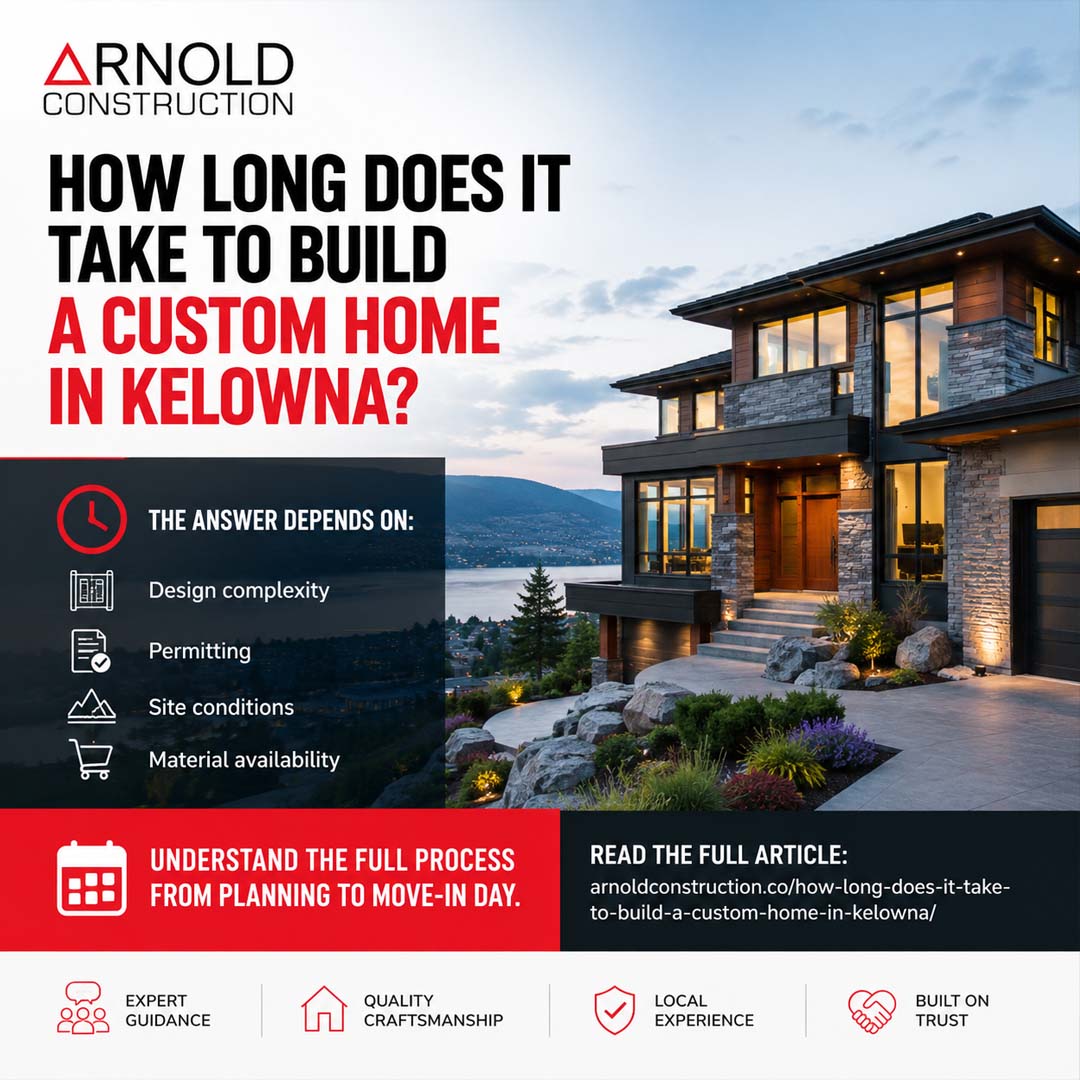
Most custom homes in Kelowna take between 12 and 18 months from initial planning to final completion. The timeline depends on factors such as design complexity, permitting requirements, site conditions, weather, material availability, and construction scope. Larger or more complex homes may require additional time.
Quick Timeline Overview
A typical custom home project includes:
- Initial planning and consultation
- Design and drafting
- Engineering and permitting
- Site preparation and excavation
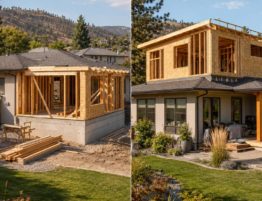
- Foundation and framing
- Mechanical and electrical work
- Interior finishing
- Final inspections and occupancy
Each phase plays an important role in delivering a successful project.
Phase 1: Planning and Design
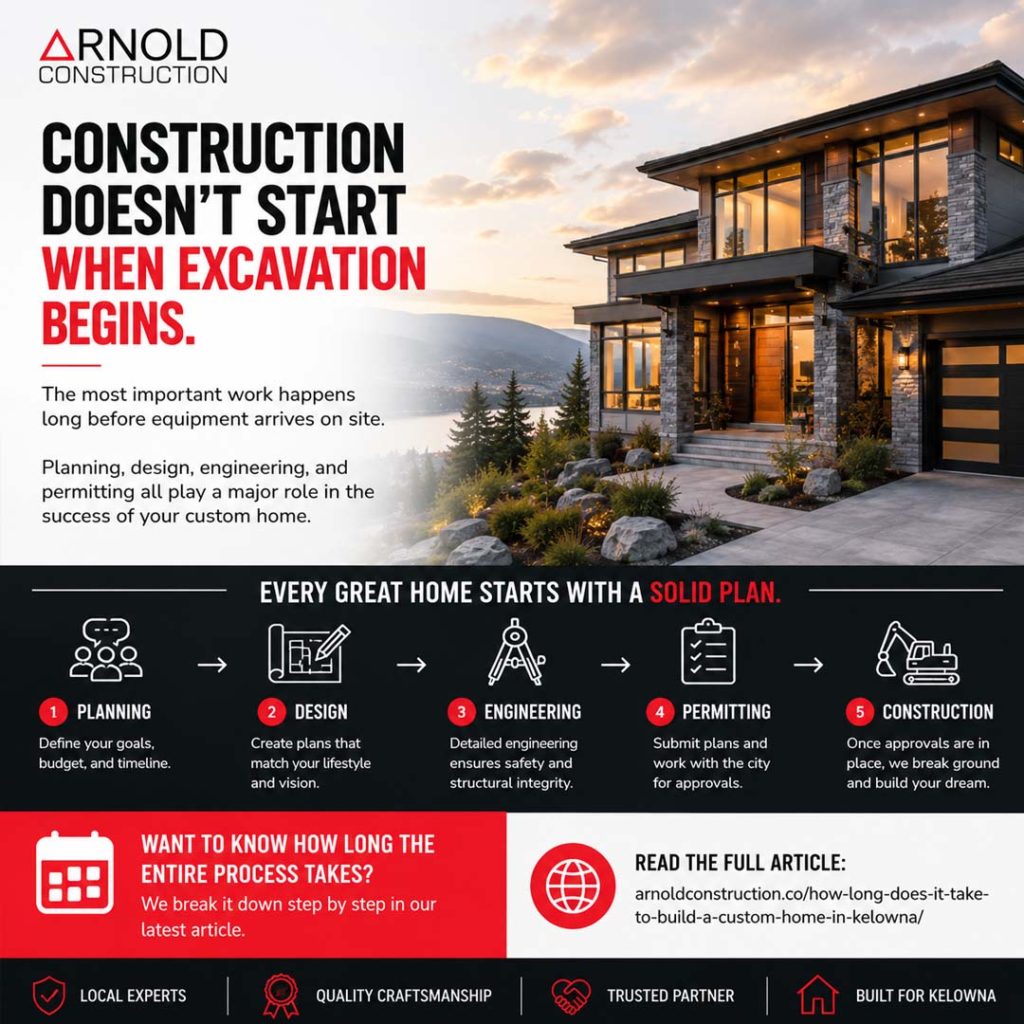
Typical Timeline: 1-3 Months
Many homeowners underestimate how important this stage is.
During planning, homeowners typically:
- Define project goals
- Establish budgets
- Select a builder
- Develop preliminary designs
- Evaluate lot conditions
Investing time during planning often saves time and money later.
Phase 2: Engineering and Permits
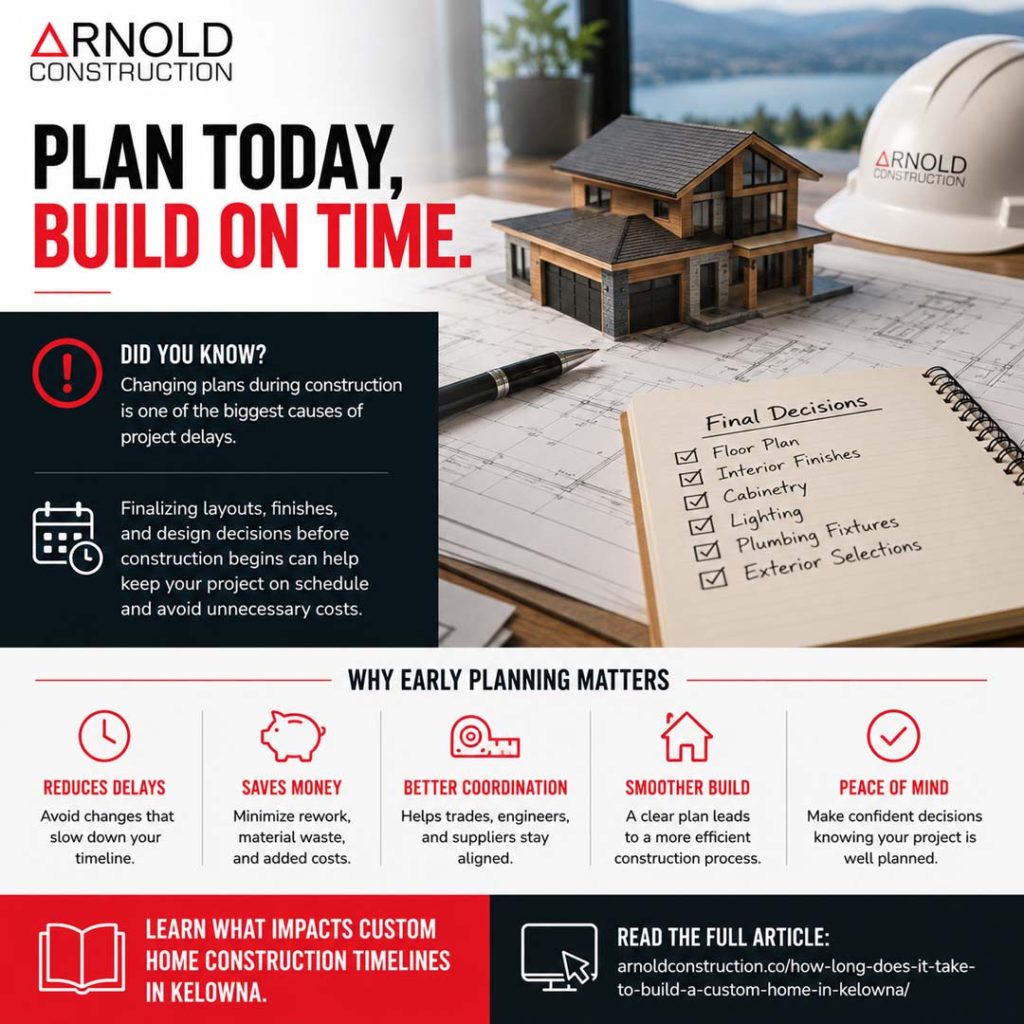
Typical Timeline: 1-4 Months
Before construction can begin, plans often require:
- Engineering review
- Permit applications
- Municipal approvals
- Site-specific requirements
Approval timelines can vary depending on project complexity and municipal workloads.
Phase 3: Site Preparation and Excavation
Typical Timeline: 2-6 Weeks
Once approvals are in place, construction begins with preparing the site.
This may include:
- Excavation
- Grading
- Utility preparation
- Rock removal
- Foundation preparation
Properties with slopes, difficult access, or rock excavation may require additional time.
Phase 4: Foundation and Framing
Typical Timeline: 2-4 Months
This is when homeowners begin to see their home take shape.
Work typically includes:
- Foundation construction
- Framing
- Roofing
- Exterior sheathing
- Window and door installation
Weather can occasionally influence this stage, particularly during winter conditions.
Phase 5: Mechanical Systems
Typical Timeline: 1-3 Months
With the structure enclosed, trades begin installing:
- Electrical systems
- Plumbing
- HVAC systems
- Ventilation
- Insulation
Proper coordination between trades helps keep projects on schedule.
Phase 6: Interior Finishing
Typical Timeline: 2-4 Months
Interior finishing is often the most detailed stage.
This phase includes:
- Drywall
- Painting
- Flooring
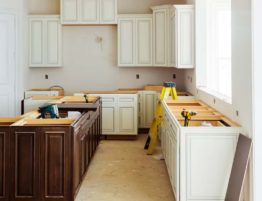
- Cabinetry
- Millwork
- Fixtures
- Final finishing details
Custom selections and specialty finishes may affect timing.
Phase 7: Final Inspections and Occupancy
Typical Timeline: 2-6 Weeks
Before homeowners move in, the home must pass final inspections and receive occupancy approval.
This stage may include:
- Deficiency corrections
- Final inspections
- Landscaping completion
- Final walkthroughs
Once approved, homeowners can officially take possession.
What Can Delay a Custom Home Project?
Several factors can extend timelines:
Design Changes During Construction
Changes after construction begins can affect schedules and budgets.
Site Challenges
Rock excavation, drainage issues, and difficult access can add time.
Permit Delays
Municipal approval timelines can vary throughout the year.
Material Lead Times
Certain windows, doors, specialty products, and custom finishes may require extended ordering periods.
Weather Conditions
While construction continues year-round, severe weather can occasionally affect certain phases.
How Homeowners Can Help Keep Projects on Schedule
Homeowners play an important role in maintaining momentum.
Helpful strategies include:
- Making finish selections early
- Finalizing designs before construction begins
- Communicating clearly with the builder
- Avoiding unnecessary mid-project changes
- Working with experienced local professionals
The smoother the decision-making process, the smoother the build tends to be.
Why Experience Matters
One of the biggest factors influencing construction timelines is project coordination.
Experienced builders understand:
- Local permit requirements
- Kelowna site conditions
- Trade scheduling
- Material procurement
- Construction sequencing
This helps reduce delays and create a more predictable building experience.
Planning a Custom Home in Kelowna?
Building a custom home is one of the most exciting projects a homeowner can undertake, but understanding the timeline is essential for success.
Arnold Construction Co. helps homeowners throughout Kelowna navigate every phase of the building process, from initial planning and permitting through final completion. Early planning and experienced guidance can help create a smoother, more efficient building experience.
Contact Arnold Construction Co. today to discuss your custom home project.
People Also Ask
How long does it take to build a custom home in Kelowna?
Most projects take approximately 12 to 18 months from planning to completion.
Can construction continue during winter in Kelowna?
Yes. Many phases of construction can continue year-round, although weather may affect certain exterior activities.
What is the longest part of building a custom home?
Design, permitting, and interior finishing often account for a significant portion of the overall timeline.
FAQ
How early should I contact a builder?
Ideally, before finalizing plans or purchasing a lot.
Do permits affect construction timelines?
Yes. Permit approvals are often one of the most significant factors affecting project schedules.
Can custom finishes extend the timeline?
Yes. Specialty products and custom materials can have longer lead times.
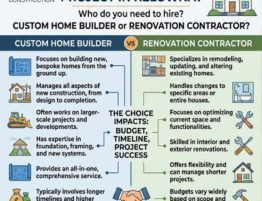
Is building a custom home faster than a major renovation?
In some cases, yes. Large renovations can uncover hidden issues that create unexpected delays.
What is the best way to avoid construction delays?
Early planning, clear communication, and working with an experienced local builder are the best ways to keep a project moving efficiently.