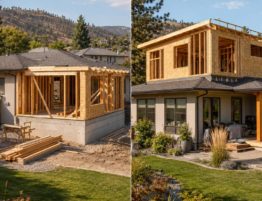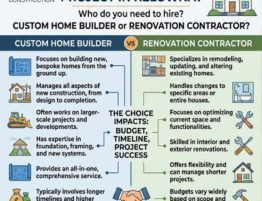

Timing is everything when it comes to building or renovating a home in Kelowna. Deciding when to start can impact not only your construction schedule but also your budget, material availability, and overall project experience. Whether you’re planning on building a custom home or undertaking home renovations in Kelowna, understanding seasonal realities and local timelines is key.
Here’s a detailed look at the best times to build or renovate in Kelowna and how early planning can save you time and money. Don’t forget to check out last month’s article on custom home costs in Kelowna!
Spring vs. Summer vs. Fall Construction in Kelowna
Kelowna’s climate and construction industry trends make spring and summer the most popular times for building.

Spring Construction (March–May)
- The ground begins to thaw, making excavation and foundation work easier.
- Contractors are ramping up for busy summer schedules, so early booking is crucial.
- The weather is generally mild, reducing weather-related delays.
Summer Construction (June–August)
- Peak building season with the most reliable weather.
- Trades are fully staffed, but demand is high, which can increase labour costs.
- Ideal for exterior work like landscaping, roofing, and siding.

Fall Construction (September–November)
- Cooler temperatures can slow some exterior work, but interior projects continue smoothly.
- Material delivery schedules are less congested compared to the summer.
- Often a great time for renovations where interior work is the main focus.
How Long Do Permits Take in Kelowna?
Permits are a critical part of any project, and timing them correctly is essential:
- Residential building permits in Kelowna typically take 2-6 weeks, depending on complexity.
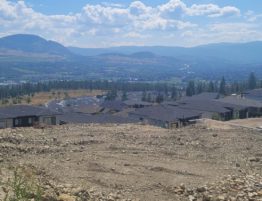
- Large custom homes or hillside lots may require additional approvals, adding several weeks.
- Submitting your plans early, especially before spring, can keep your project on track and avoid costly delays.
How Early Should You Start Planning?
Even if construction isn’t until summer, the planning process should start months in advance:
- Design & Budgeting: 2-3 months before construction to finalize plans, materials, and financing.
- Permits & Approvals: Submit permits 2-3 months ahead of your preferred start date.
- Contractor Scheduling: Top builders in Kelowna book out 6-12 months in advance, especially for custom homes.
Starting early allows you to:
- Lock in your preferred builder and trades
- Make material selections without rushing
- Avoid seasonal price spikes and labour shortages

Winter Planning Advantages Most Homeowners Overlook
While winter isn’t ideal for exterior construction, it’s perfect for planning:
- Finalizing designs and budgets indoors
- Pre-ordering materials to avoid spring shortages
- Scheduling site evaluations and permitting early
- Negotiating contracts before peak demand
Planning in winter means your project can start seamlessly in spring, saving time and potentially reducing overall costs.
How Early Decisions Can Reduce Total Build Cost
Making timely decisions directly affects your bottom line:
- Early planning reduces the risk of rushed material purchases at peak prices.
- Choosing finishes and layouts ahead of time prevents costly last-minute changes.
- Securing a builder’s schedule early can avoid premium charges for rush projects.
Even small timing decisions, like ordering windows or multi-slide doors ahead of peak season, can save thousands.
Is Winter a Bad Time to Start a Custom Home?
Not necessarily. While site work can be limited in winter due to cold or snow, interior-focused construction can continue. Plus, winter planning gives you a head start on spring, ensuring you’re ready to move forward as soon as conditions improve.
When Should I Contact a Builder?
The answer is: as early as possible. A knowledgeable builder in Kelowna can:
- Assess your lot and seasonal conditions
- Advise on realistic start dates and timelines
- Guide material selections and cost-saving opportunities
Early consultation ensures your project is set up for success and avoids unnecessary delays or stress.
Planning Ahead Makes All the Difference
Whether you’re building a new custom home or renovating an existing property, timing and planning are essential in Kelowna. Early decisions allow you to:
- Avoid delays and seasonal challenges
- Keep costs under control
- Ensure a smoother, more enjoyable construction experience
Arnold Construction Co. brings hands-on experience and local expertise to every project. Contact us today to start planning your Kelowna home because the best time to build or renovate isn’t just when the weather is right, it’s when your plan is ready.

FAQ for When is the Best Time to Build or Renovate a Home in Kelowna?
Q1: What is the best season to build a home in Kelowna?
A: Spring and summer are generally the best seasons for construction in Kelowna due to milder weather and reliable conditions. Fall can also work, especially for interior-focused renovations, while winter is best for planning and permit preparation.
Q2: How long does it take to build a custom home in Kelowna?
A: Most custom homes take 10-14 months, depending on lot conditions, design complexity, and permit timelines. Early planning can help you start in the optimal season and avoid delays.
Q3: How long do permits take in Kelowna?
A: Residential building permits typically take 2-6 weeks, though complex or hillside lots may require longer. Submitting plans early ensures your project can start on schedule.
Q4: Can I start a renovation or build in winter?
A: While exterior work is limited in winter, interior-focused work, design finalization, and permitting can continue. Winter planning sets you up for a smooth spring or summer start.
Q5: How early should I contact a builder in Kelowna?
A: Contacting a builder 6-12 months before your intended start gives you the best chance to secure skilled trades, schedule permits, and make material selections without rush or added costs.
Q6: How can early planning reduce total build costs?
A: Early decisions help avoid premium pricing, reduce last-minute design changes, and allow you to lock in materials and contractors ahead of peak demand, potentially saving thousands on your project.